Showing posts with label research. Show all posts

Sunday, November 14, 2010

Information Graphics: Simplification of logic processes

                                                                        (Source:as below image)
(To celebrate the achievement of another,)

Information Graphics is an accurate way of displaying information or data through a concise graphical representation. In layman parlance, “Infographics” is every symbol or flow of symbols that convey a meaning through an idea rather than language. Infographics once shared a common heritage with language when the Hieroglyphics were considered pictorial representations and not meaningful words. Infographics is currently being applied to the decoding of the symbolic language of the ancient Indus valley civilization.
From these primeval beginnings almost lost in the mists of time, Infographics continues to play a vital role in several modern applications. Infographics retains an edge due to its ability to get ingrained faster and longer into the human brain. Infographics provides direct instructions cutting through the verboseness of the language I type. The application of Infographics that I think is really cool is in the field of Man Machine interface. Think I, Robot.

                                               (Source: blog of Scott Sheppard: "http://labs.blogs.com/its_alive_in_the_lab/2008/05/index.html")

The interface between humans and the AI in a computer gets more and more complex every time Microsoft brings a new OS out. Yet the primary computer language remains Boolean expressed in the forms of 0’s and 1’s. As more and more people seek access to computers for more complex tasks a certain amount of programming control is handed over to the user. A simple example can be seen from the MS OS. The early generation Windows 98 had very few plugins, if any. Most plugins could only be activated by using the complicated MS-DOS shell. The ability to configure the system, either its hardware or software was limited at best. Compare that to the Windows 7 or if you can imagine, the future Windows 8. The possibility and intricacies appear limitless and therein lays a flaw in the system. 

Computer programming is based on choices the user makes. In a way it is governed by the Heisenberg uncertainty principle. As the number of options grow large the effectiveness/hardiness of the program decreases and this leads to increase chances of malfunction. In common speak computers become smart enough to interpret inputs in ways they were not intended to. Consider a complicated software that flies a personal air vehicle (refer Post on PAV’s here). An error could be disastrous. Neither could the program be simplified to give greater power to the human operator because he/she might want to know as little about flying as I do about Justin Bieber. So we enter the crunch paradox where over simplification or complication can lead to disaster. The only way out is a radical change in the system of programming.


 (Source:www.nasa.gov; heuristic based graphical coding)


                                                                                                                                                                                                                 (Source:www.javaworld.com; command based graphical coding)

Unlike Graphical User interfaces (GUI’s) which display a pictorial work desk but maintains a Boolean computer language, Infographics can reach out to both the user and a computer mainframe because in essence it is symbolic logic. Computer algorithms have historically been described as sequential steps which execute a logic function but another effective and efficient way to represent algorithms is a flow chart. Flow charts contain symbols with meaning. If you work the Boolean command under the overall architecture of a flow chart you create symbolic programming instead of Object oriented programming. OOPs creates a multitude of objects varying types and functions but symbolic programming concerns itself with just two absolutes; an information or algorithm and the sequence of graphics that represent it. So rather than having the user and computer in two different pages, with the user barraging a stream of orders, unaware of what the computer is going through, by working through a sequence of Infographics he remains an equal player in grasping the notion of what’s going on.
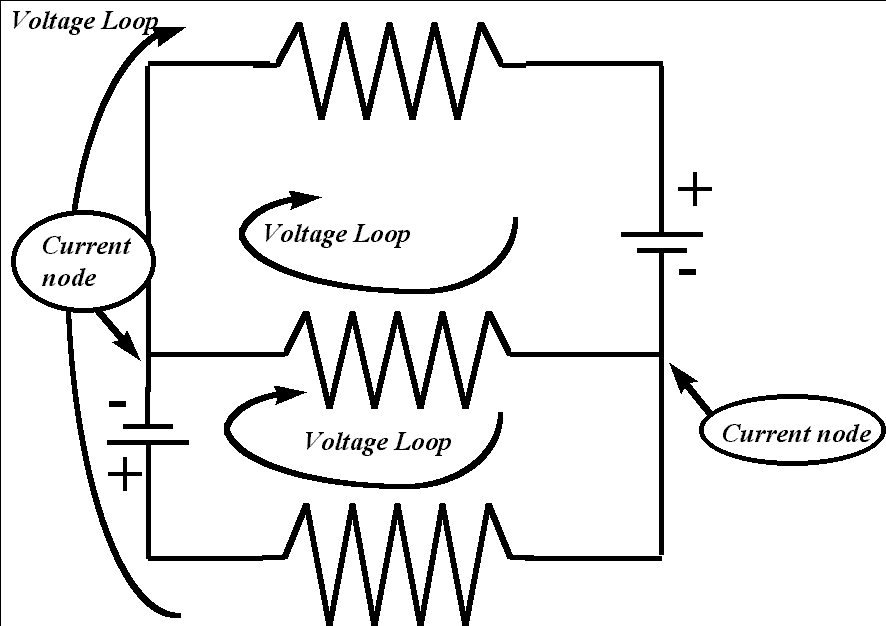
                            (Source:www.math.ucdavis.edu; Electric circuit example of infographic representation )


Infographics has already found a hardware application in the form of different network topologies. In a way akin to how the invention of math made calculations child play, the application of Infographics have allowed net-workers to create networks of unparalleled complexity and power. Its application in the realm of electricity has yielded electric and logic circuits that power some of the best super computers in the world.
Neatly put, Infographics brings the best out of math and logic. It uses a little known but very powerful part of our brain that strongly identifies with symbols. It allows us to reduce noise in transmission of ideas be it through programs or diagrams. While being hard and resilient to anomalies it retains the flexibility to add branching pathways of newer ideas, information or options. I wonder if you could put this post up as an Infographic.


Friday, November 12, 2010

Of lab reports, melancholy and sheer boredom

 
NOTE: This blog is intentionally condensed. If you cant take it, you might consider some lighter reading below.


In all honesty I am perplexed by my sudden influx in the interest to blog. I suppose it’s a therapeutic after all the lab report writing and trauma that follow the beginning of winter. A note of interest would be that the idea of this blog was conceived while my mind roamed deep inside the art of creating tables for Viscosity Lab, ENG 191. The work was tedious but let me crystallize an unshapely and ungainly spark into an idea of substance.
The idea centers the quintessential question; can engineers, masters of technology contribute meaningfully to research in the pure sciences. What is the role of the overbearing “lab report” in attaining this end. At first it might appear ludicrous to the point of lunacy to connect these two points which seem at far ends of an n dimensional Einsteinium space. As I continue I shall demonstrate how related they are in as concise a manner a good, prosaic engineer can deliver.
  •   Lab reports create an understanding of how science really works. It goes beyond the equations of physics and the theories of chemistry into the real crux of an experiment. I was perturbed when I found out that despite the same type of material and density, the different tubes exhibited different viscosity.
  •    Lab reports create a respect for the powers we seek to control. I would never have imagined that Physics, i.e Young’s modulus would have made me skip a few suppers; some sleep and hypnotically control my brain for a full three days.
  •   Lab reports demonstrate how much we still have to learn in the sciences. (Refer Viscosity lab write-up Page 5-8. The formulas look like they involve tensors{hyperbolic})
  •   Lab reports give us an insight into how intricate, arduous and in other words, absorbing and interesting different sciences can be.
  • Lab reports are a necessary pain in the arse, but once completed, they can be looked on as a finished work of art. I know for a fact that when I hold all those sheaves of printed paper in my hand, I probably feel as proud as Albert holding his 1905 paper on special relativity.

So, to get an understanding on how we engineers differ from our nerdy scientist brethren I need and can think of one obvious reason. Unlike “them” we use the different sciences to create meaningful articles for use by people and industry. We are the medium by which lots of folk back home wash their laundry (washing machine) or look up shows beamed from halfway across the world (satellites, tv sets). Yet I must remember that all these are but possible because of people who chose to research on the fields of sciences like Math, Physics or Chemistry. These people are not too different from us either. They just have a more disproportionate distribution of passion across subjects. Engineers with their ability to connect science with good use for the benefit of mankind are natural partners in any scientific research. 


Astrophysics and dark matter holds a special romantic space in my heart usually reserved for people I love. In time they will surely provide mankind with some tangible benefits. Can’t an engineer research on this frontier of space? Or will over-specialization eat up all chances of a multidisciplinary search for truth. With all the wisdom from the lab reports, how can we go wrong?


Tuesday, May 18, 2010

Knowledge in India, Past and Present

Lets start simple. What is knowledge? I prefer Oxford and this is what they’ve got to say: “knowledge is expertise, and skills acquired by a person through experience or education”. The reader might question this definition but I doubt he would question the need to obtain knowledge.

The debate on whether one should obtain knowledge is clearly one sided. Not so for a debate that questions the motive behind the arduous venture. The truth behind an individual’s desire to seek knowledge is a question that provokes different answer at different stages of one’s life and no two people has the same thing to say. When this question is applied to the cohesive whole such as humanity, it is possible to give abstruse replies such as, “to find the light” or “to seek the truth”. For an individual to answer so would make him in the eyes of a common man, either a pompous ass or a man in league with the greatest philosophers of the world.

I chose India specifically for two reasons. Firstly it’s my home, and my own native curiosity just gets the better of me. Secondly and more importantly the country has a society that has valued education continuously for thousands of years.

The earliest example of knowledge being passed comes to us from the Vedas. An ancient work dated to 1000 BC. The Vedas mention ashrams, where the students lived a simple hard life in the teacher’s house. Instruction was often given through spoken word or activity. The important feature of this knowledge is that it was aimed at sharpening basic skills and eventually enlightens the mind. Knowledge was a mean to transcend into a higher state of mental being. Students were taught the use of weapons, scriptures, philosophy, science and morals. The greater purpose was to make the student a better human.

As of the year 2000 AD, a vast majority of India’s student population chose engineering as their profession. India has more engineers than the Unite States by a factor of four. Despite this two interlinked issues emerged. Firstly there is a large pool of low quality of engineers and secondly, the low research output and efficiency. While there are many factors that can be attributed to the issue if they were to occur separately, their simultaneous nature reduces the range of probabilities. The final reason is simple yet alarming. A sizeable number of these engineers lacked the will or the aptitude to do engineering. The root of the problem lies not in policy but in the fallout of colonialism.

As a colony India had been brutally exploited and economically ruined. From the time of the company till the 1990s the shattered economy made Indian education a feeder system. Education was used to enter the workforce get paid and build a stable life. Education became the biggest profit making investment for an individual. Pay the least tuition by going to the smaller college and you can still take home many times more the money you spent. From the 1970s technical schools of various nature and quality sprouted unchecked providing innumerable degrees. Anyone could be an engineer and for that moment everyone wanted to be. The shock and fear of destitution caused people to choose either by will or by pressure the established professions as a safe route. Eventually this became tradition and deeply integrated itself in the conservative south of the country.

Moving to the issue of research. Unusually research was segregated from university education from the very start in India. Universities were used to produce manpower for industries and research was carried out in separate government sponsored units. Even today, despite numerous home grown companies’ research is given a low priority in the Indian education system, generally even by students. Teaching the theory rather than the practical application of it is the aim of the university. The two reasons for this I have already mentioned, namely lack of talented or motivated manpower or lack of suitable monetary remuneration.

The third reason is shunning the influence of the liberal arts and dampening of the spirit of enterprise. In the attempt to provide efficient and low cost education to students to work in a profession, that is minimum input for maximum gain, we have forgotten the powers of the liberal arts. As the source of our most ancient knowledge, the arts can widen minds and allow the spawning of fantastic new ideas. This view of education is strictly taboo in a middle class family. This is no more due to the hardship they face as thinks have got much better. The reason is because of the hardships they had faced which ingrained within them the conservative ideas.

The new generation however is changing these ways. Gradually through change or youth’s rebelling against career choices new inroads are being made to hitherto untapped fields of work and study. With the liberalizing of the economy greater opportunities, both in quantity and variety are being made available in India. It is ironical that the form of education one’s espoused by the west, namely the strict roman system is the one that modern India has adopted. Instead the ancient Indian way of learning, with its diversity, choices and continuous search of enlightenment (research) has made western education system stronger, though not without its own fallacies.