Some are born great (like Harry Potter). Others have greatness thrust upon them. It seems that President Obama is falling into the latter category. He probably knew something of this sort was coming when he ran for the Presidency. He might not have accounted for how much he would need to rise to meet the challenge. The title of the blog suggests a question which I am in no position to answer. So I’d rather illustrate why the question seems important.
I’ve seen politics in the UK and India but nowhere has it been as polarized as in the US; at least when it comes to serious things. That the tea party, with vocal supporters of default can actually exert considerable influence in the decision making is alarming. While its most likely that default will be averted in the eleventh hour, the very fact that it took that much of give and take to reach a consensus pushes me to ask the question I did. Democracies are strong because they involve people. Any policy made is the result of a consensus and hybridizes ideas of different parties. Yet when faced with obstinate parties and unwavering ideologies: the core of any consensus, “compromise” is lost. That is a divided house. It’s a place where people start caring more about their beliefs and ideologies. Not about the house and the nation.
On the other hand there is the President. He is the elected representative, indirectly chosen by the people to lead them. To prevent concentration of power he is subject to the legislators on Capitol Hill. At times, he has the luxury of exemplary support in both houses. Else he executes the policies of the Federal government by engaging with the hill. His personality, charisma and power are crucial to the enabling of consensus. Several American presidents’ present precedents on this matter, including Dwight Eisenhower (often poor relations with Congress) and Ronald Reagan (exhausted the Soviets). In this case however, President Obama clearly is not able to break deadlock. He might be able to cajole his own party to accept cuts in social policies. He cannot get the G.O.P house speaker, John Boehner to accept closure of tax loopholes, let alone rises. Boehner in turn is under pressure from the conservative right to concede not an inch of ground. The democrats too refuse to concede deep cuts in a bloated and inefficient social service. Clearly if every party is to have their way a default is inevitable. A default will be terrible. It will spark partial government shutdown, quickly depreciate the dollar, increase cost of borrowing, and bump up actual cost of living. It will jeopardize the American and Global economy. Eventually as the American people get affected Congress will undoubtedly act. It would then be too little too late.
What the president must remember is that while Congress will be to blame, it is a body of 535 people. Eventually, they are responsible to their constituent which consists of a couple of million; at most. The president on the other hand is an individual directly responsible to the nation; vested with enormous authority to act in its interest. Congress might be paralyzed by the powerful weakness of democracies: indecision. That is why the executive exists. It is time for the president to do something truly presidential, if he can.
Showing posts with label people. Show all posts
Showing posts with label people. Show all posts
Thursday, July 28, 2011


Friday, November 26, 2010
Thanksgiving , a taste of the Indian and American: Perspectives on Indo American community
 |
| source:http:\\www.wikipedia.org |
Tonight I am at my aunts in Chicago. It’s a place that I can call home within a thousand mile radius of the university. A few hours ago we had a very good meal of turkey, potato, sauce and pies. Right now I’m watching the New York jets demolish the Cincinnati Bengals, albeit with some sorrow. That’s not what I am going to write this blog over, I rarely write on games. Today I will write about family, food and what I see as the identity of people of Indian origin in America. The family I met was my own; relatives who’ve been here for a rather long time. Some are American citizens, other are well on their way to being one. Given this context some might consider the meeting to be akin to meeting outsiders, alien to my usual way of life. That is certainly not the case.

After 2 months of university life, surrounded by my friends and work, meeting indirect family (Not my parents) in such a situation can be discomfiting. I mean where is my real home here? India is too far away and so is the answer Chicago or Columbus? That answer will still need some debating. So when an uncle I have not met in like 8 years picks you up on the 5.5 hour long drive to Chicago. When you move from the two month familiar university campus to somewhere else in an unfamiliar country it can be frightening. Yet they are family. See the paradox? Regardless of my fear or inhibitions the evening did turn out to be fine. We had a very Indian celebration in the afternoon called Raksha bandhan. Like thanksgiving it celebrates the unity of family. The dinner as I said was resplendent. At its end I was left with a very delectable impression. South Asian Indians in America are not very different from their counterparts back in the old world. If anything what makes them different is superfluous and frivolous. I attribute them to cultural differences over pop and movies and maybe the skill with the English language. The real difference lies in how they integrate the best values of the American society while retaining the timeless values that come with being a good Indian.

So today got me thinking about home and I decided to write a bit more about it. About what it is like back there and what makes Indian people despite their sordid condition, inheritors of a brighter future. India today, as the villages go, is poor hungry and populous. Child mortality and the development index in five states are as low as in Sub Saharan Africa. A simplistic reasoning would be that things from here can only go up. A more logical explanation would be that this harsh world creates a strong drive for improvement in its people. People often argue that Dharavi, one of the world’s largest slums is also a tremendous school in entrepreneurship and resilience. So the engine of the Indian economy runs on the intense competition and the sheer bulk of a billion people. I go to college in America and the relative lack of competitiveness is very perceptible. Advantages present here however are tremendous, such as better infrastructures and superior experience based teaching.
So let me tie up the previous paragraph with the rest of the blog. People of Indian origin in the United States play a vital role for both India and the relationship between our two countries. With time and India’s rising status differences in American strategic interests over Indian ones might become irksome. It will be the responsibility to a large extent of the expatriate community to soothe the nerves. It will also be important for them to build bridges of understanding between the two cultures. One such understanding would be individual competition and strive to succeed (Rationalize the reality of outsourcing and compete to survive). American corporate success has been driven by its fierce competition. This competition among individuals died down soon enough in view of the economic boom that swept the country. This complacency is why fewer Americans went to college and the American economy lost the edge of its strong asset; its people. That is the same asset which for so long was India’s burden and that is now being put to good use. The global economy is changing and the isolation of individual competition from America is coming to a close. It will be more important now than ever for those who never stopped competing to seize opportunities and reinvigorate this trait back into the American ethos. Hard work is respected and always pays.

Friday, November 12, 2010
To do or not to do... -from experiences in the new world

- · Never ask the person next to you to move over on a transatlantic flight.
- · Never hold the urge to pee till you land.
- · Never appear lost and keep an eye on your baggage, especially in Heathrow airport, London.
- · Always keep your passport on you even if you have an overbearing but well meaning parent insisting over its custody
- · If questioned by immigration police over absence of passports point at said parent and hope they don’t laugh too loud.
- · Always be polite, even (maybe especially) in the face of an irate policeman with a handgun
- · Accept the complimentary wine (if under 21) with decisiveness and be nonchalant.
- · Pretend to be a kid if sitting next to a highly testosterone fuelled man with a gleam in his eye
- · Flirt with the air hostess. You get perks
- · Shake firm and if your hands feel crushed, bear it with a good countenance.
- · Gather your bags and get out of the airport as soon as possible. They can cancel your visa as long as you are in the airport.
- · Talk to the cabbie and give him a tip.
- · Never take a bath in a motel, only showers if you must.
- · Swallow the fact that your kid cousin knows more about American football with good grace (erst it gets unpleasant)
- · Never give in to an American what football is. (it is NOT SOCCER!)
- · Love the country; it’s beautiful as are the people.
- · Walk as much as you want the sidewalks are heavenly.
- · Cars ACTUALLY yield to pedestrians.
- · Talk to the people because most of them are waiting for you to do just that.
- · Never picture the national cuisine from the food in the cafeteria.
- · Party for all the good and right reasons.
- · Live with moderation and toleration.
- · Do not dimension to hidden lines
- · Relationships are verrrrryyyyyy sloooowwwww. Go SLOW!
- · Be friendly and cheerful most Americans are and strive to be just that
- · Live your culture but respect theirs (its more than just Hollywood)
- · Never call hotdogs WIENARS.
- · Forget about good bangers and mash. Fish n chips aren’t too great either.
- · They have a weird cellular system why do phones cost so much and why cant I cancel a plan without a fee!
- · Opportunities abound but you need to ask around. Americans are very independent to the point that asking might look embarrassing, but do it. No one cares
- · To try not to jay walk. I’ve done it on occasions but I really do not want to check the effectiveness of the Columbus City police.
- · ESPN 3 has live and replay feeds of most football and cricket matches (YAY!!!!). it was an easy find, kudos Google.
- · Have fun and work hard. People respect both and love both.
- · Be social it’s your one good bet to take tons of green home. You could either marry rich, make rich friends strike rich contacts or strip a rich passed out drunk.
- · Always help a drunk passed out girl home SAFELY. You feel good about it even though it might mean you have to tolerate entering the girls toilet to pick her up.
- · There are classical Americans who still read books and like writing poetry. (There’s hope). No stereotype is ever right and none are.
- · Don’t be evil

Tuesday, June 8, 2010
Crossroad in Afghanistan
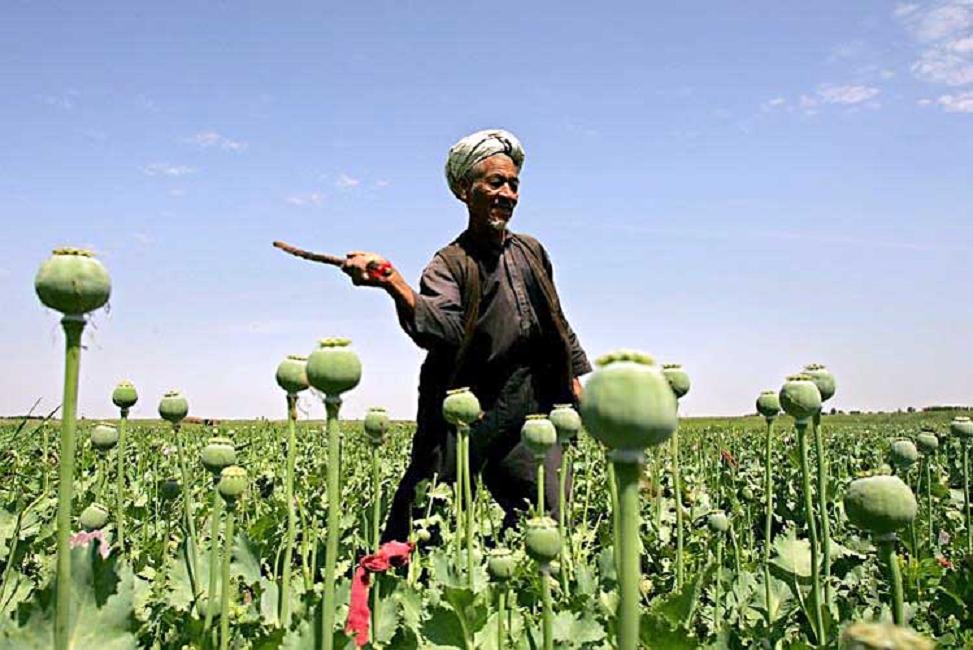
Afghanistan.
When I think about it, it amazes me to see how many trees have been cut to print articles about this country. In the last thirty years, many thousands have died fighting against occupiers, for faith and honor. You could say that their last thirty years of history was writ in blood. This has left a deep and lasting psychological impact on the people. Post resuscitation of their country, Afghanis expected the dream of Ahmed Shah Massoud to become a reality. That failed and a strong democratic nation could not be established.

Out of this darkness the Afghani people and especially children have developed apathy to values perceived to be American, namely liberty, democracy and free economy. This will be the source of future problems. The issue in Afghanistan is not intrinsic to the country. Its more like a parasite. The country was a fertile ground for jihadist activities due to the war mongering developed amongst its people. Now as ordinary afghans grow increasingly tired of violence the fight is being led by foreign fighters. They neither care for Afghanistan or its people. The Taliban especially see the warlords as temporary allies on the road back to power. This is probably the greatest strength of the Afghan government.

The threat to the stability of the Afghan democracy stems from two primary sources. One is the resurgent Taliban and the other being the warlords.
Both can be quelled if the Afghan government in Kabul is viewed positively by the people. This would require extremely good governance. The values of democracy, namely freedom and liberty must be enjoyed by most if not all. Economy can be revived by spending on infrastructure and cottage industries. Afghanistan needs to create a middle class. This strategy will be especially suitable against the Taliban which depends largely on supporters from the lower society of the country.
Paradoxically the warlords threaten the integrity of the country through their immense wealth and connections in the high rungs of power. Money gives them the ability to higher men and contacts within the government give them the right to rule their estates. A suitable countermeasure would be to involve different people. What Afghanistan needs desperately now are leaders. Right now political power is concentrated at Kabul. Regional leaders and warlords need to be brought into the parliament by election. This is not unlike the integration of post independence India.

Maybe Afghanistan has more to learn from India than Pakistan. Maybe the United States would be better advised to let the Afghani people chose their ally and make their decisions for the fate of their country.
Subscribe to:
Posts (Atom)