Saturday, November 20, 2010

The chemistry of chocolates and chocolatiers

www.chocoimages.com

The etymology of Chocolate spawns from an Aztec drink discovered by the Spanish and called Xocolatl. The drink was a raw brew of bitter cocoa. To make it palatable to the sweeter European tastes, the Spanish added milk and sugar creating the world’s first hot cocoa drink.  Since then the industry and the people who drove it have created names like Nestle, Cadbury Schweppes and Ferrero SpA. This blog will identify the tastes of chocolate, the amazing new kinds being made and the chemistry that compels most of us to fall inexorably in love with the confection.
The year is 1860 and revolutions are gripping Germany and the Ottoman Empire. The civil wars are ripping America and rebellion ferments in India.  Far removed from these tragedies of life a little man with lots of spunk tries to make the world a sweeter place to be. He was a Swiss and gifted with the rocky resilience and determination they are known for, Henri Nestle starts shop of Nestle & Co. The initial chocolates favored the Swiss taste of strong and bitter. Dark chocolates gripped the Swiss nation and overflowed to neighboring Germany. A year later the German revolution was over. It wasn’t till the taste of amour crossed the English Channel did it face resistance from the peaceful but sweet loving Britons. This allowed the entry of a new player, Cadburys which revolutionized the brown chocolate market. As candy and other derivatives of chocolates took hold, the centre of the confection world shifted west across the Atlantic to the city of Chicago. 


Chocolate in essence can only be of two types, Black or White. The other variations depend purely on the amount of cocoa. What makes the industry really fun is the diversity it allows by experimenting with flavors, additives and ratios. I’ve TRIED to make mint chocolate once. The main ingredients were grounded cocoa with milk, sugar pepper and essence of mint. I wasn’t like 100% successful, though the result was perfectly edible and tasted of mint. The curious things I learned from this experiment included but not limited to: Pepper and sugar are flavor enhancers; you dilute chocolate with vegetable oil and not water. Then there are the molds which you can use to allow fillings of honey, mildew, nutmeg and raisins. Shapes also play an important role in justifying the chocolate. Dark chocolate is a better binder than white chocolate and as a result can support much more exquisite shapes. 

www.metro.co.uk

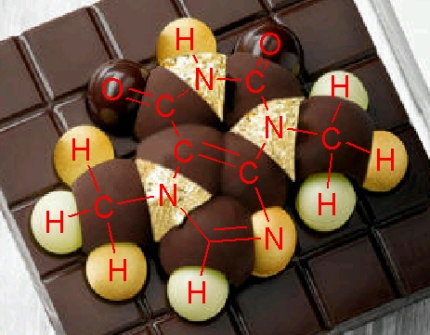
So why does chocolates remain a delicacy for mankind. Why does it retain its symbol of love and refinement? Arguably the first can be associated to the chemicals theobromine and phenylethyl amine. To a chem. E both these compounds are aromatic in nature possessing resonant structures and weak chemical bonds. As a result they can easily break bonds to release energy and spawn reactions that give pleasurable smells and products. An easy example of such a reaction is by the means of a deodorant like. The chemicals break up on your body to cover up your stink. Another historically perturbing question to men at least is DO woman really dig chocolates and why? Tthat would answer one sure thing about the cuter sex. Billions of dollars of research later scientists could say this. Chocolates are extremely attractive to women for two primary reasons. The smell triggers the release of endorphins, (also called pleasure hormones) which satiates them. The amine on the other hand surges production of oxytocin which is associated with love and warmth. So the familiar warm and fuzzy feeling becomes a reality.
www.khymos.gr.ju


Chocolates are becoming more powerful and bold in their ideas and concepts every day. Changing from the Chocó bar to soft core bonbons and finally the artificially engineered chocolates that we can now consider to make. The theory behind this concept would be artificial aromatic compounds either of the phenol or ketone group. Compounds from these groups can be used to create compound chains which tamper with hormonal balance of the body. For now this remains unlawful but as we subject ourselves to greater doses of caffeine and toxins the line between artificial chocolates and danger gets finer by the minute. Synthetic chocolate can be used for good too though. The world craze for chocolate has contributed to the destruction of vast areas of amazon forest. Synthetic chocolates through yeast or chemical bases can substitute some of the need. With time, chemistry and chocolatiers will find the need to co-operate in order to maintain the sweet success of this sticky story.

 My mint Honey mint choco recipe
A can of cocoa powder, Icing sugar, Milk, Mint extract, Clear edible oil, Raisins, Honey, pepper and sugar.
Mix cocoa and milk in a suitable ratio to obtain desired color and consistency. (Rule of thumb: 1spoon to 2  cups). Add icing sugar to desired taste. Warm the concoction over a very low flame for 2-3 minutes while stirring. For a cup of chocolate add a spoon of Mint extract and half a spoon of honey. (Vary by taste.) Add raisins liberally and sprinkle pepper to taste. While stirring add oil judiciously to remove sluggish coagulation. Use molds to create shapes and add extra fillings as you wish. Quick freeze for 1 hour. Stow it in the refrigerator.

www.fergusonpiaresonline.ca

Wednesday, November 17, 2010

In memory of a friend who never gave up on me.


Much has been said about this topic and as time changes; more can be said about it. This is probably one of the more absorbing experiences; normally reflected on in retrospect or studied as a form of cultural preparation. Sitting in a lonely lounge in the department of foreign languages (Hagerty Hall) , I can probably find no better place to type this blog. I must tell you that this will be in a very informal style, and should the reader choose to leave, well; I really can’t stop him, can I? Nor do I intend to make this a blog for a hapless international acutely homesick. You do not have to leave a country to feel out of place sometimes. Nevertheless, being a newcomer into the age of 17 and a new country does offer a unique emotional perspective. I thought the most prudent place to start this blog, would be the greatest cultural barrier of all, language.
English is the lingua franca of America. Everyone uses it though Spanish keeps catching up. Now my English isn’t particularly bad and yet occasional misunderstandings keep flaring up when I least expect them. Say you walk into a cafeteria and see the delicious hot dog you want. In a moment of ravenous impulse you ask the sweet lady behind the counter for a wiener. The look she gives you …. Oh damn! In a stroke of pure genius you realize your mistake and stutter an apology which tends to include the words “foreign” and “not from here”. She shakes her head in disgust and off you go head hanging in shame. Now, if that sounded funny its only because I intended it to. For anyone else in the situation knows how dangerous it can really be.
Not to say anything of those so many others who find the fluid parlance of English a challenge. Imagine a class room which as daunting as it already is (I am an Engineering major) is spoken in a different language or with different and unfamiliar quirks, terminologies or accents. The manner of instruction can be a significant challenge as might be the decorum expected.
Its 09:00 AM and my math recitation teacher is passing out the quizzes. He calls out a name of a person right behind me but in a location that makes it difficult to approach. The helpful Indian that I am I rise to get the paper and pass it on to her. He stares at me, she stares at me, and the whole class looks on in mild amusement. I’m like what did I do now??? American embarrassment No.2. Never touch a quiz belonging to someone else and refrain from asking a classmate how much they scored on a quiz. Privacy is a very big thing. Now I made it a point to ask a close American friend if this was the norm and his answer was negative. Yet from my viewpoint there is a difference in classmate relationships here and elsewhere. Some of the warmth, maybe?
A better example would be the Engineering class. Now I am not very good in this class. There is something about dimensioning and drawing that I find troublesome. I do love the computer work though. So when we work as a group on a question I find the situation inclusive and yet paradoxically exclusive. We work as a group from a shell of self. Unlike the probing questions I am used to in groups back home “Hey did you get it?” or “Do you want me to help you?” or even “What the hell are you doing?!?”, if I choose to distance myself from the group here, I could do so. That is not to say the classroom is devoid of warmth, in fact it’s not! We didn’t have too many conversations on the Premier league teams in the classrooms I was used to but Engineering here is teaching me quite a bit about the Patriots and Steelers. So the laissez faire attitude co exists with exams and grades. The group works with sub units existing within. To be fair I must say that the person truly at fault is me. The assumptions I draw are made by my mind from what to others is a very natural American classroom. In truth, I and most in my situation have a nagging feeling of not really belonging and that is what makes the difference between a normal classroom and the “American” classroom. Rationally, I do not expect anyone to change for me. I need to change and make myself feel to belong. That has been done by others before me and I shall do it too. My experience remains mine and unique.
That brings us to the final part of the blog. A dispassionate account of the emotions I experienced. The oxymoron is well suited because most emotions I encountered are paradoxical. Lonely sometimes and yet at the centre of attention else while. Embarrassed by awkward moments which later turn out to be wonderful dinner conversations. Alienated by my different upbringing which fascinates my friends. I do wonder if these experiences remain meaningless in a larger context. Are they abstractions of language and useless appendices of emotion in a wannabe engineer?
I think not. I think it’s important for me or anyone else to consider these emotions and adapt to the surroundings without corrupting the unique values and character that we had learned and acquired. Right now I’m sitting on the amphitheater by Mirror Lake, looking at a mutated duck waddle by. Whatever the challenge I need to adapt wisely. Sure I miss home very much. Home is a long way away and this country is in so many ways a constant reminder of what it was back there and then again, not. However the lessons learned here is part of working in a global economy with sensitivity to multinational collaboration. It’s also a lesson in control and a test of maturity. To break into frustration, tears or anger is to accept weakness. The challenges are hard and some grades might be low but to give in is to lose it all.

Sunday, November 14, 2010

Information Graphics: Simplification of logic processes

                                                                        (Source:as below image)
(To celebrate the achievement of another,)

Information Graphics is an accurate way of displaying information or data through a concise graphical representation. In layman parlance, “Infographics” is every symbol or flow of symbols that convey a meaning through an idea rather than language. Infographics once shared a common heritage with language when the Hieroglyphics were considered pictorial representations and not meaningful words. Infographics is currently being applied to the decoding of the symbolic language of the ancient Indus valley civilization.
From these primeval beginnings almost lost in the mists of time, Infographics continues to play a vital role in several modern applications. Infographics retains an edge due to its ability to get ingrained faster and longer into the human brain. Infographics provides direct instructions cutting through the verboseness of the language I type. The application of Infographics that I think is really cool is in the field of Man Machine interface. Think I, Robot.

                                               (Source: blog of Scott Sheppard: "http://labs.blogs.com/its_alive_in_the_lab/2008/05/index.html")

The interface between humans and the AI in a computer gets more and more complex every time Microsoft brings a new OS out. Yet the primary computer language remains Boolean expressed in the forms of 0’s and 1’s. As more and more people seek access to computers for more complex tasks a certain amount of programming control is handed over to the user. A simple example can be seen from the MS OS. The early generation Windows 98 had very few plugins, if any. Most plugins could only be activated by using the complicated MS-DOS shell. The ability to configure the system, either its hardware or software was limited at best. Compare that to the Windows 7 or if you can imagine, the future Windows 8. The possibility and intricacies appear limitless and therein lays a flaw in the system. 

Computer programming is based on choices the user makes. In a way it is governed by the Heisenberg uncertainty principle. As the number of options grow large the effectiveness/hardiness of the program decreases and this leads to increase chances of malfunction. In common speak computers become smart enough to interpret inputs in ways they were not intended to. Consider a complicated software that flies a personal air vehicle (refer Post on PAV’s here). An error could be disastrous. Neither could the program be simplified to give greater power to the human operator because he/she might want to know as little about flying as I do about Justin Bieber. So we enter the crunch paradox where over simplification or complication can lead to disaster. The only way out is a radical change in the system of programming.


 (Source:www.nasa.gov; heuristic based graphical coding)


                                                                                                                                                                                                                 (Source:www.javaworld.com; command based graphical coding)

Unlike Graphical User interfaces (GUI’s) which display a pictorial work desk but maintains a Boolean computer language, Infographics can reach out to both the user and a computer mainframe because in essence it is symbolic logic. Computer algorithms have historically been described as sequential steps which execute a logic function but another effective and efficient way to represent algorithms is a flow chart. Flow charts contain symbols with meaning. If you work the Boolean command under the overall architecture of a flow chart you create symbolic programming instead of Object oriented programming. OOPs creates a multitude of objects varying types and functions but symbolic programming concerns itself with just two absolutes; an information or algorithm and the sequence of graphics that represent it. So rather than having the user and computer in two different pages, with the user barraging a stream of orders, unaware of what the computer is going through, by working through a sequence of Infographics he remains an equal player in grasping the notion of what’s going on.

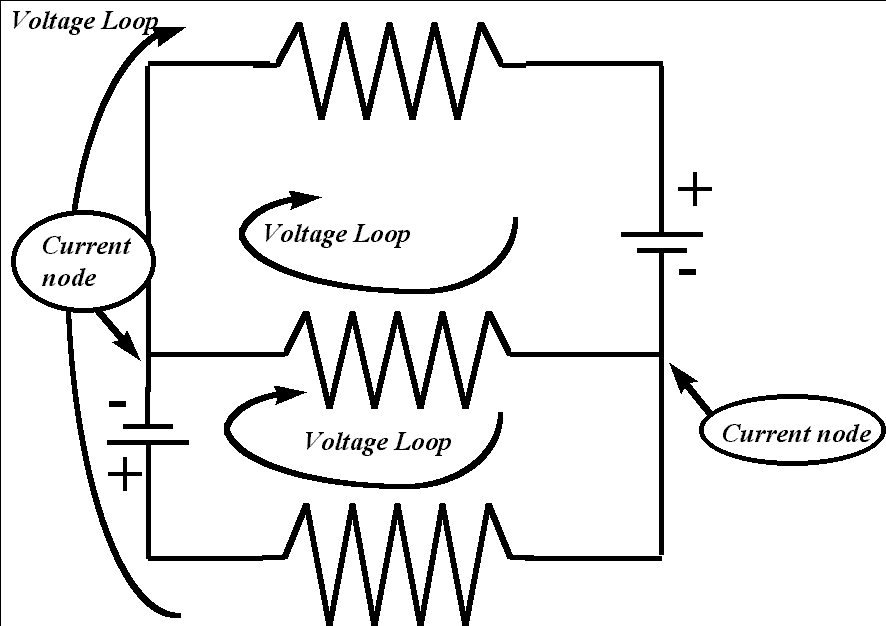
                            (Source:www.math.ucdavis.edu; Electric circuit example of infographic representation )


Infographics has already found a hardware application in the form of different network topologies. In a way akin to how the invention of math made calculations child play, the application of Infographics have allowed net-workers to create networks of unparalleled complexity and power. Its application in the realm of electricity has yielded electric and logic circuits that power some of the best super computers in the world.
Neatly put, Infographics brings the best out of math and logic. It uses a little known but very powerful part of our brain that strongly identifies with symbols. It allows us to reduce noise in transmission of ideas be it through programs or diagrams. While being hard and resilient to anomalies it retains the flexibility to add branching pathways of newer ideas, information or options. I wonder if you could put this post up as an Infographic.


Friday, November 12, 2010

To do or not to do... -from experiences in the new world


  •  ·        Never ask the person next to you to move over on a transatlantic flight.
  • ·        Never hold the urge to pee till you land.
  • ·        Never appear lost and keep an eye on your baggage, especially in Heathrow airport, London.
  • ·        Always keep your passport on you even if you have an overbearing but well meaning parent insisting over its custody
  • ·        If questioned by immigration police over absence of passports point at said parent and hope they don’t laugh too loud.
  • ·        Always be polite, even (maybe especially) in the face of an irate policeman with a handgun
  • ·        Accept the complimentary wine (if under 21) with decisiveness and be nonchalant.
  • ·        Pretend to be a kid if sitting next to a highly testosterone fuelled man with a gleam in his eye
  • ·        Flirt with the air hostess. You get perks
  • ·        Shake firm and if your hands feel crushed, bear it with a good countenance.
  • ·        Gather your bags and get out of the airport as soon as possible. They can cancel your visa as     long as you are in the airport.
  • ·        Talk to the cabbie and give him a tip.
  • ·        Never take a bath in a motel, only showers if you must.
  • ·        Swallow the fact that your kid cousin knows more about American football with good grace (erst it gets unpleasant)
  • ·        Never give in to an American what football is. (it is NOT SOCCER!)
  • ·        Love the country; it’s beautiful as are the people.
  • ·        Walk as much as you want the sidewalks are heavenly.
  • ·        Cars ACTUALLY yield to pedestrians.
  • ·        Talk to the people because most of them are waiting for you to do just that.
  • ·        Never picture the national cuisine from the food in the cafeteria.
  • ·        Party for all the good and right reasons.
  • ·        Live with moderation and toleration.
  • ·        Do not dimension to hidden lines
  • ·        Relationships are verrrrryyyyyy sloooowwwww. Go SLOW!
  • ·        Be friendly and cheerful most Americans are and strive to be just that
  • ·        Live your culture but respect theirs (its more than just Hollywood)
  • ·        Never call hotdogs WIENARS.
  • ·        Forget about good bangers and mash. Fish n chips aren’t too great either.
  • ·        They have a weird cellular system why do phones cost so much and why cant I cancel a plan without a fee!
  • ·        Opportunities abound but you need to ask around. Americans are very independent to the point that asking might look embarrassing, but do it. No one cares
  • ·        To try not to jay walk. I’ve done it on occasions but I really do not want to check the effectiveness of the Columbus City police.
  • ·        ESPN 3 has live and replay feeds of most football and cricket matches (YAY!!!!). it was an easy find, kudos Google.
  • ·        Have fun and work hard. People respect both and love both.
  • ·        Be social it’s your one good bet to take tons of green home. You could either marry rich, make rich friends strike rich contacts or strip a rich passed out drunk.
  • ·        Always help a drunk passed out girl home SAFELY. You feel good about it even though it might mean you have to tolerate entering the girls toilet to pick her up.
  • ·        There are classical Americans who still read books and like writing poetry. (There’s hope). No stereotype is ever right and none are.
  • ·        Don’t be evil


Of lab reports, melancholy and sheer boredom

 
NOTE: This blog is intentionally condensed. If you cant take it, you might consider some lighter reading below.


In all honesty I am perplexed by my sudden influx in the interest to blog. I suppose it’s a therapeutic after all the lab report writing and trauma that follow the beginning of winter. A note of interest would be that the idea of this blog was conceived while my mind roamed deep inside the art of creating tables for Viscosity Lab, ENG 191. The work was tedious but let me crystallize an unshapely and ungainly spark into an idea of substance.
The idea centers the quintessential question; can engineers, masters of technology contribute meaningfully to research in the pure sciences. What is the role of the overbearing “lab report” in attaining this end. At first it might appear ludicrous to the point of lunacy to connect these two points which seem at far ends of an n dimensional Einsteinium space. As I continue I shall demonstrate how related they are in as concise a manner a good, prosaic engineer can deliver.
  •   Lab reports create an understanding of how science really works. It goes beyond the equations of physics and the theories of chemistry into the real crux of an experiment. I was perturbed when I found out that despite the same type of material and density, the different tubes exhibited different viscosity.
  •    Lab reports create a respect for the powers we seek to control. I would never have imagined that Physics, i.e Young’s modulus would have made me skip a few suppers; some sleep and hypnotically control my brain for a full three days.
  •   Lab reports demonstrate how much we still have to learn in the sciences. (Refer Viscosity lab write-up Page 5-8. The formulas look like they involve tensors{hyperbolic})
  •   Lab reports give us an insight into how intricate, arduous and in other words, absorbing and interesting different sciences can be.
  • Lab reports are a necessary pain in the arse, but once completed, they can be looked on as a finished work of art. I know for a fact that when I hold all those sheaves of printed paper in my hand, I probably feel as proud as Albert holding his 1905 paper on special relativity.

So, to get an understanding on how we engineers differ from our nerdy scientist brethren I need and can think of one obvious reason. Unlike “them” we use the different sciences to create meaningful articles for use by people and industry. We are the medium by which lots of folk back home wash their laundry (washing machine) or look up shows beamed from halfway across the world (satellites, tv sets). Yet I must remember that all these are but possible because of people who chose to research on the fields of sciences like Math, Physics or Chemistry. These people are not too different from us either. They just have a more disproportionate distribution of passion across subjects. Engineers with their ability to connect science with good use for the benefit of mankind are natural partners in any scientific research. 


Astrophysics and dark matter holds a special romantic space in my heart usually reserved for people I love. In time they will surely provide mankind with some tangible benefits. Can’t an engineer research on this frontier of space? Or will over-specialization eat up all chances of a multidisciplinary search for truth. With all the wisdom from the lab reports, how can we go wrong?


Thursday, November 11, 2010

Grasping the notion of being American.

Affirmation-Savage Garden


I am a student of the Ohio State University in Columbus OH, Midwest region of the United States of America. I am a student in one of the largest university in this country. I am an international student in a foreign land. In this blog I will write about how I try to make, this New World my home.
There are no true ways to measure people. No arbitrary generalization or stereotype can serve as an absolute definition of a society, not the least in diverse America. So to get a feeling of this place I needed to understand my own feeling and analyze my experiences. So through my story at OSU, I try to bring out what my new home, truly means.

I am an engineering major and this makes most of my classes Science or Math based. Additionally as an honors student I end up meeting most of the smarter people in the college. The classes are liberal and the students self dependent. So, one stereotype of Americans as being fiercely individualistic is proved to an extent to be true. It is almost as if no one wants to know much about anyone else s business. This might be in a way good, but I fail to see how ever competition might arise if no one seeks out rivals. The best answer I can offer myself is that they compete with themselves and use averages or numbers as targets. Sounds weird but this is the norm of a new world.   


Then again the society is as dynamic as the American stock market and this justifies the saying, “only in America”. From college students pioneering research to underage binge drinkers who completely lose control, the college society is plagued and yet gifted by some of the most vicious and virtuous traits. This mess can only be characterized as sardonic or regretfully amusing by an outsider. The conflict is caused by less of an issue of lose morale and more of the need to keep an external prudish image. For all the fun they strive to have, college kids strive equally hard to maintain a crisp image that might be diametrically opposite to their character.  


Cultural differences to what I am used to is abundant. Relationships for starters are treated much more carefully and if I care to add ‘properly’. Unlike the laissez faire I was used to for most of my life, America where everything seems to go, also has some unsaid rules of its own. Learning the ropes have been hard, painful even and managing the complexities of relationships challenging. For what can be considered proper or even apt somewhere else in the world, can and is probably considered weird on this side of the planet. So as I feel my way through this intricate but gossamer web of society I hope to come out at worst with a bruised eye and a broken heart. Nothing too permanent I hope. At worst I could always do what the French do; Parley! 

Friday, November 5, 2010

Friends I knew


Let me post something a little more personal for once. This post was long in the making. That’s because it has touched me the most and deals with something close to my heart. It deals with several of my closest friends. I see them as part of my family. They changed me and they taught me things I might never have learnt.

We make lots of friends in our lives. Each time we meet someone new, we can’t help ourselves but try to understand them. There is something in us, as humans that make us wonder and wish to meet people of our kind. Even the Spanish conquistador, Cortes tried to understand the Incas before he vanquished them and their empire. In a country as diverse as India I meet tons of different, yet similar people. They are different because they come from different backgrounds, communities, regions and religions but they all share a common culture and understanding. Yet there are often so many misunderstandings within my country. Imagine an Indian who goes to an international forum. He must be a public menace, right?


This is probably true of other large countries. On the October of 2009, I was lucky enough to take part in the World School Forum, Japan. I and two of my compatriots boarded the plane with different notions and ideas. We might deny it now, but I distinctly remembered worrying if the Australians would find us ok (there were lots of race riots in Oz back then). Now you can ask yourselves, why would we even want to bother to go through these programs? I’ll come to that at the end.

I reached my room in Tokyo at past midnight. I was sharing it with a kiwi, Chinese and Japanese. India fought a war against China, and the Japanese plus, I didn’t know much about New Zealand. Of course all this was the last thing on my mind back then. I got into my room awkwardly enough. Tomoki (my Japanese mate) insisted on carrying my bags. I tried to apologize to the guys for waking them up. I slid into bed.


The first day, we broke barriers. We sat with our own countries but during the first break, we broke ice. I guess we were so curious about the others that we just couldn’t control ourselves. We were super excited and that brought inhibitions crashing down. I chatted up with some South Africans who loved cricket, kindred spirits. I met some awesome Canadians; my Asian brothers from Korea, Japan and Indonesia. I spotted my neighbors from Sri Lanka and the second best debater of Romania. I found a Fin and we talked about Stalin and met a New Zealander who loved Japanese Manga. I also ran into a very crazy but intensely lovable Aussie. It was a wildly awesome day.

We learned many different things from each other. As the theme of the forum was food and value, we understood a lot about the food cultures of the different countries. That was not the end though. Anything from games to movies, sports and dances was talked about or (in case of dance) tried. So with every day we kind of grew closer and closer, till the final day when we didn’t want to leave each other.


So why did we do it? What’s the point of these forums and meets?

There is this one thing and it’s called diversity. Its importance is not often realized and most often misunderstood. Exposure to diversity allow us to see problems from a variety of perspectives. It lets us use the diverse knowledge of different people to solve common problems. Take for example Japan’s problem of an aeging population. India with its strong family value system faces the reverse problem of too many young people and over population. Perhaps both countries can learn from each other and obtain solutions to their respective crisis. Again, when you try to find a solution to cut global emissions you need a personalized method for every nation.


Another thing we learned or rather experienced was what you would call the appearance of the Globalism . We communicated effectively amongst ourselves because most of us spoke English. Those who did not understood the importance of this particular language. We had common interests in music, bands, clothing and some foods (The Italians won with their pizza and spaghetti). We even face the same problems of terrorism, pollution, environmental degradation and economic meltdown. This does not mean we were completely alike. Rather each of us added a different flavor to the forum that just made it sweeter.

The best thing was the most personal. It dealt with how each of us looked at the rest as outsiders and someone different. You realize how pointless it is to worry about meeting and mingling with people. Different races, customs, languages and cultures coexisted together and worked on the forum together. In our pursuit to fight problems and work towards common goals (even in the football game) we found that our best allies were ourselves.


We have learned that and we need to live that. We make choices that do not cause prejudices. We work to make other s understand this. And we never let the friendship die. While we are students we have got to work hard to get good grades, because when we grow up we have to meet again. Then we will do more.